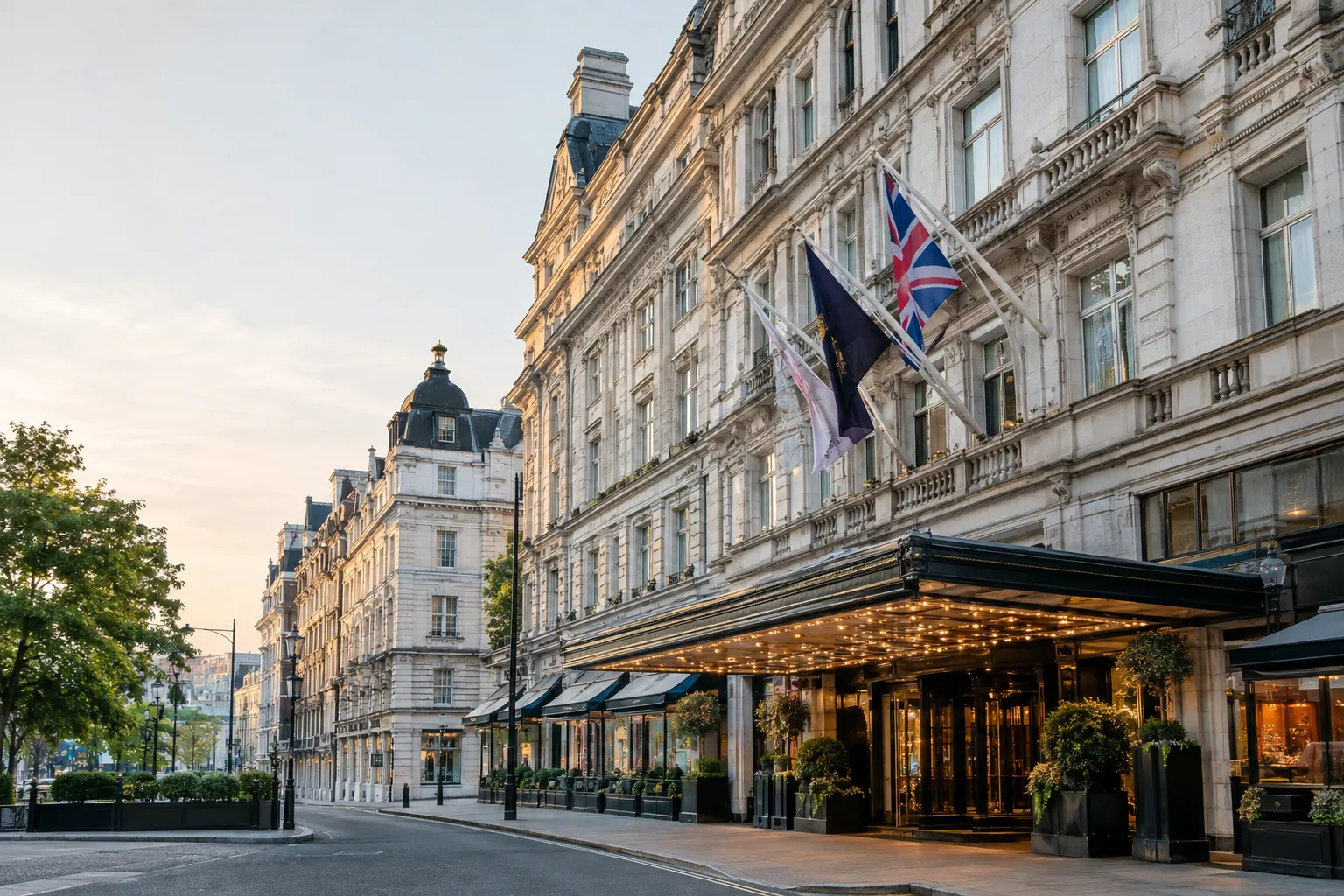
From its 1889 opening to its present-day restaurants, rooms and riverside setting, The Savoy Hotel brings together several strands of London life. Understanding those connections makes a visit more rewarding and helps separate enduring character from details that need checking before travel.
The Savoy Hotel: a London institution beside the Thames
The Savoy Hotel is a landmark on the Strand, where the West End meets the Thames. Its identity is shaped by more than a famous name: it is a working hotel whose history reaches back to the late nineteenth century, and whose public spaces bring together accommodation, dining and the rituals of London hospitality. For a visitor, that combination makes The Savoy interesting both as a place to stay and as a lens through which to consider how the city entertains and receives its guests.
The hotel opened in 1889. Its official history links the Savoy name to a much older palace and traces the hotel’s own place in London’s dining and theatre life. That heritage is not simply a decorative backdrop. It gives context to the hotel’s restaurants and bars, its afternoon tea tradition and the way the building occupies a prominent position between the Strand and the river.
This guide considers The Savoy as a specific London hotel: its origins, location, guest experience, food and drink, and the cultural setting around it. Practical details such as current menus, opening times, access arrangements and room features can change, so they should be confirmed directly with the hotel before a visit.
A history rooted in London’s changing hospitality
The Savoy’s history is part of its appeal, but it is more useful to read that history as a story of changing hospitality than as a catalogue of famous associations. When the hotel opened in 1889, it entered a London already shaped by theatres, restaurants and the growing importance of the West End as a place to see and be seen. The Savoy’s subsequent reputation developed in dialogue with those surrounding institutions.
The official heritage account connects the hotel with the evolution of dining and hospitality in London. It discusses afternoon tea, chef Auguste Escoffier and the American Bar, subjects that help explain how food and drink became central to the hotel’s public identity. They also show why The Savoy has remained part of the city’s cultural conversation: a hotel can be a place to sleep, but its restaurants and gathering spaces can also form part of the life of a neighbourhood.
The name itself reaches further back than the hotel. The official history refers to a medieval palace associated with the Savoy name. The distinction matters: the modern hotel is a Victorian-era institution, while its name carries older associations. Together, those layers give the place a sense of continuity without suggesting that the present building is itself medieval.
A thoughtful visit does not require specialist knowledge of hotel history. It is enough to notice how the past appears in the hotel’s self-presentation and how the experience remains contemporary. A heritage hotel has to function in the present: rooms, restaurants and guest services must meet current expectations while preserving a coherent sense of place. The Savoy’s history is therefore most interesting when read alongside its continuing role as a hotel rather than as a static monument.
The Savoy Hotel’s Strand setting and the nearby city
The Savoy stands on the Strand, overlooking the Thames. That position gives it a distinct relationship with London: on one side is a busy central street and the West End; nearby are Covent Garden and Trafalgar Square; and the river provides a second orientation to the city. The hotel’s official visitor information describes these nearby landmarks as within walking distance, making its setting useful for visitors who want to combine a hotel stay with central London exploration.
Location is part of the experience, not just a point on a map. The Strand connects the hotel to a longstanding corridor of theatres, cultural venues and civic landmarks. Covent Garden offers a different urban rhythm, while the Thames gives the area an open, riverside perspective. These contrasts make it possible to plan a day with variety without treating the hotel as an isolated destination.
A practical approach is to choose one or two nearby places as the focus of each outing rather than attempting to cover the whole centre in a single walk. Check current opening arrangements for any attraction or performance independently, and leave time for the return to the hotel. Distances that look short on a map may feel longer in a crowded central area, especially when the day includes theatre timings or a restaurant reservation.
The hotel is also near the Savoy Theatre, a separate venue on the Strand. The shared name and close geography can easily cause confusion. The theatre and hotel are distinct places, and a stay at the hotel should not be taken to mean that theatre admission or special access is included. Anyone planning an evening performance should check the theatre’s own current programme and visitor information.
Rooms and suites: choosing a stay that fits the visit
The rooms and suites are a central part of the hotel’s offer, but a useful guide should avoid treating room descriptions as fixed promises. The Savoy maintains an official rooms page with information about its accommodation. Room names, design details, views, facilities and availability are details to verify against that current information and the terms shown when making a reservation.
For a stay, the best choice depends on how the room will be used. A visitor spending most of the day exploring London may place greatest value on a comfortable base and a convenient location. Someone planning a slower visit may care more about the room’s layout, outlook or time spent within the hotel. The hotel’s website is the appropriate place to compare room categories, understand what is included and check specific requirements before confirming a booking.
The same principle applies to accessibility and practical needs. If a particular room arrangement, access feature or other accommodation requirement is important, ask the hotel directly and obtain confirmation for the intended dates. A general room page cannot establish that a particular feature is available in every category or on every date.
The Savoy’s heritage is visible in its overall identity, but each stay is also a present-day transaction shaped by the precise room, dates and arrangements selected. Reading the current room information carefully helps distinguish the broad character of the hotel from the specific details of an individual reservation.
Dining, the American Bar and afternoon tea
Food and drink are integral to The Savoy’s story. The official history highlights the hotel’s links with London dining, including its association with Auguste Escoffier and the American Bar. Its current restaurants-and-bars information presents several distinct venues, while the dedicated afternoon tea page identifies Gallery as a setting for that experience. Together, these details show that dining is not an incidental extra; it is one of the ways the hotel expresses its identity.
Afternoon tea offers a particularly recognisable format for a visit. It is a structured pause in the day, combining tea and food in a setting designed for lingering conversation. The hotel’s official page provides the current information about the experience. Menus, service times, prices and reservation requirements are all liable to change, so check those details directly rather than relying on an old menu or third-party listing.
The American Bar has a different role in the hotel’s public image. Its name appears in the official history and in the hotel’s dining and bar information. Rather than assuming a particular menu or atmosphere from its reputation, consult the current venue details to understand what is being served and what arrangements apply. The distinction between a historical reputation and today’s actual offer is important when planning a visit.
If food or drink is the main reason for visiting, decide whether the aim is a full meal, a drink or afternoon tea, then check the relevant venue’s current information. Confirm reservation policies, dietary requirements and any practical arrangements with the hotel. That small amount of preparation makes it easier to appreciate the setting without making outdated assumptions about what is available.
Wellness and the rhythm of a hotel stay
A hotel stay can include time set aside for rest as well as sightseeing. The Savoy’s official wellness information describes facilities and treatments, while the hotel’s wider visitor information is the place to check what is currently available. Because opening arrangements, access conditions and treatment offerings can change, avoid assuming that every facility is included with every stay or that access is unrestricted. Confirm the details directly, especially if a particular facility is important to your plans.
The value of wellness facilities is also personal. For some guests, a short visit between city activities may be enough; others may want to reserve a longer period for rest. Consider this when planning the day. If the purpose of the stay is to explore central London, leave enough time for the journey between activities and the hotel. If quiet time is a priority, allow the hotel itself to become part of the itinerary rather than treating it only as a place to sleep.
The same care applies to treatments. Review current descriptions and availability, and ask the hotel about any requirements that affect suitability or scheduling. A facility list is a starting point for planning, not a guarantee of access at a particular hour or on a particular date. Clear confirmation helps ensure that expectations match the actual arrangements.